
 All
All Leafy Greens
 Salad
Salad Microgreens
 Edible Flower
 Herbs
Herbs
Putrajaya: De Lettuce Bear Berhad (DLBB) shared its insights on the rising potential of edible flowers at the Seminar Teknikal BPIT 2025 (SEMTECH BPIT 2025), a national platform that gathers BPIT officers to strengthen technical capacity, exchange field expertise, and explore emerging agricultural technologies in support of Dasar Agromakanan Negara 2021–2030 (DAN 2.0).

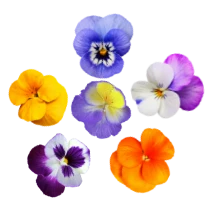
During the seminar, DLBB’s Chief Public Relations Officer, Mr. Steve Eng, highlighted that edible flowers are rapidly moving into mainstream demand, driven by Malaysia’s expanding café culture, social-media-influenced dining trends, and a growing preference for premium, visually appealing culinary experiences. Today, edible flowers are increasingly used in hotels, cafés, bakeries, and home kitchens, signalling a broader shift toward aesthetic-centred food culture.
Despite this growing momentum, we recognise that the sector continues to face structural challenges. Malaysia remains heavily reliant on imports, which results in inconsistent quality, volatile pricing, short shelf life and unreliable supply. These factors create operational difficulties for horeca players and constrain long-term industry development.

“Edible flowers are no longer a garnish but a new category of high-value produce ready for commercial scaling.” said by Mr. Steve Eng
At DLBB, we outlined how our controlled-environment urban farming model is designed to close these gaps by enabling stable, year-round production with consistent quality and reduced wastage. Through our integrated Farm-to-Fork ecosystem, which encompasses seedling production, indoor cultivation, post-harvest handling, cold-chain logistics and distribution to both retail and horeca channels, we aim to provide a reliable, high-quality supply of edible flowers to the Malaysian market.
With the local edible flower market valued at RM12–18 million and overall penetration still low, we see substantial opportunities for expansion, including future export potential within ASEAN. This direction aligns with national efforts to modernise agriculture through technology adoption, sustainability and the development of high-value specialty crops.
DLBB’s participation in SEMTECH BPIT 2025 reflects its commitment to supporting Malaysia’s agricultural transformation through innovation, supply-chain strengthening and strategic crop diversification.


